

What if the best skincare for dry skin isn’t a longer routine, but a few products you enjoy using? A crowded shelf can make every cream, serum, and “hydrating” label feel like another decision. Words like “clean” don’t explain what a product does or whether its texture and directions suit you.
If choosing feels harder than caring for your skin, start with comfort and function rather than a trend or a perfect-sounding claim. This guide will help you compare product roles, read descriptions, and build a routine around what you want to use, without collecting extras.
You’ll learn how common skincare categories differ, what to notice when reading product information, and how to keep your routine simple. My Big Market’s simplified approach includes The hydration collection and Bundles for shoppers exploring skincare options. The goal isn’t more steps. It’s a considered few you can return to.
Key Takeaways
- Dryness can describe how skin feels, but it isn’t a medical diagnosis on its own.
- Look beyond “clean” or “hydrating” labels. Consider a product’s role, feel, directions, and how your skin tolerates it.
- Choose between individual products and bundles based on how much choice and product information you prefer, not an assumed saving.
- Find the best skincare for dry skin by starting with one concern and choosing one product role at a time.
- Explore The hydration collection as a category, or consider Bundles if you prefer a grouped selection.
Best Skincare for Dry Skin Starts with Understanding What Your Skin Needs
Tightness after washing, a rough-feeling surface, or discomfort that makes you reach for another cream can influence what you look for in skincare. These experiences are useful clues about how products fit into your routine, but they don’t tell the whole story about your skin or amount to a diagnosis.
Dry skin is a concern described by how skin feels or looks, not a product claim or, by itself, a medical diagnosis. In everyday language, “dry” often means skin feels less comfortable or supple than you’d like. A label that says “hydrating” describes how a product is presented, not a guaranteed result for every person. For a broader overview of understanding dry skin, it helps to separate general information from what you notice in your own routine.
What shoppers mean when they search for skincare for dry skin
People may use “dry skin” to describe tightness, rough texture, or a feeling that doesn’t suit them. Those words are personal observations, not a checklist that confirms a condition. The same product can feel comfortable to one person and too rich, too light, or otherwise unpleasant to someone else.
Your preferences, tolerance, and daily habits help define what feels like a good fit. Consider when discomfort tends to show up, which textures you enjoy using, and whether a routine feels easy to repeat. The best skincare for dry skin isn’t automatically the most elaborate option. It’s a considered choice that fits your experience without asking you to ignore how a product feels.
Which product roles matter when skin feels dry
Start by identifying the job each product category is meant to do. A cleanser is for washing. A moisturizer adds a moisturizing step to your routine. A treatment is an optional category for a more specific skincare purpose. Knowing these roles helps you compare products without expecting one item to do everything.
Category names don’t guarantee a particular result, and they don’t tell you whether a product’s texture or directions suit your habits. Read the stated directions and think about where a step fits into your day. If you already have a cleanser you like, for example, you may not need to replace it just because you’re looking for something that feels more comfortable after washing. Focus on the role you actually want to add.
- Cleansing: Consider whether the product’s role fits the way you wash your skin.
- Moisturizing: Notice whether the texture feels pleasant enough to use as directed.
- Optional treatment: Decide whether you have a specific reason to add another step.
Keep your choices connected to your real routine. Texture, time, and simplicity are part of product fit, too. A small, familiar routine may feel more manageable than introducing several new steps at once. First, identify what you want to change. Then use comfort and everyday practicality to guide your next decision.
How to Judge Skincare for Dry Skin Beyond Labels and Marketing
A “clean” label or a longer routine doesn’t automatically make a product a better fit. Look for more specific information: what kind of product it is, how it’s meant to be used, and whether its feel and directions suit you. A product description can help you make an informed choice, but it can’t predict exactly how your skin will respond.
Marketing language offers a broad impression; product information explains a product’s role, directions, and stated details. Keep that difference in mind as you compare options. My Big Market describes its approach as using clean, caring ingredients and nothing more. Here, “clean” expresses the brand’s language. It isn’t a universal guarantee of suitability, comfort, or results for every person.
Read product descriptions for role and use
Start with the product category. Is it a cleanser, moisturizer, or another type of skincare product? Next, look for the use described by its maker and read the directions. If a moisturizer is described for a particular step, don’t assume it also replaces cleansing or serves as a treatment. Choose according to the role you want, rather than adding a product because its description sounds appealing.
Descriptions offer useful information, but they can’t tell you in advance how a product will feel on your skin. The Mayo Clinic’s overview of the causes and symptoms of dry skin also shows why a label alone may not explain someone’s experience. If a concern persists or troubles you, a healthcare professional can help assess it.
Treat clean and hydrating as starting points, not proof
Words such as “clean” and “hydrating” can help you notice a product, but they don’t tell you everything you need to know. A broad label doesn’t establish that the texture will feel pleasant, that the directions fit your routine, or that you’ll tolerate the product well. Those details are personal. Your past experience can be a more useful guide than a label alone.
Use this compact checklist before choosing:
- Role: What kind of product is it, and what use does its maker describe?
- Feel: Does the texture sound comfortable for your preferences?
- Directions: Can you follow the stated use as part of your everyday habits?
- Tolerance: Have you used similar products comfortably, or noticed an unwanted response before?
Read the wording closely. A product described as “hydrating” shouldn’t be treated as a promise that it will feel or perform the same for everyone. Likewise, a clean label doesn’t replace details about intended use. The best skincare for dry skin is a thoughtful match between your needs, preferences, and a product’s stated role, not the biggest set of claims.
For a simple place to browse, explore The hydration collection and use the product information to guide your choice.
Individual Products or Bundles: Compare Dry-Skin Shopping Options
Choosing between individual products and a bundle is a question of shopping style, not a shortcut to better results. Selecting products individually lets you focus on one role at a time. A bundle presents a grouped selection, which may be simpler to browse. Neither format is automatically the better fit. Choose the one that gives you the right amount of control and information.
Use this comparison to decide where you’d like to begin. It focuses on how you prefer to assess your options, not on a promise about what a product will do.
| Shopping format | Choice | Simplicity | Information to assess |
|---|---|---|---|
| Individual products | Select one item at a time. | Focus on a single product role. | Review each item’s description and directions. |
| Bundles | Explore a grouped selection. | Browse items together. | Review the listed contents and directions for each item. |
When choosing products individually may feel simpler
Shopping one category at a time can make a broad search feel more manageable. If you’re considering a moisturizer, for instance, you can compare products in that role without also deciding whether to add a cleanser or treatment. That keeps the decision focused on what you want to explore now.
Choosing products individually can also suit shoppers who prefer to read each description separately. Consider the stated use, directions, and details that matter to you, such as texture preferences. You’re not choosing a product because it guarantees a particular outcome. You’re narrowing the options by what you’re looking for and what fits your habits.
When a skincare bundle may suit a simpler shopping approach
A bundle offers a grouped way to browse. That format can feel convenient if you’d rather consider several listed items together than search through separate categories. My Big Market offers Bundles as a shopping category. The category name alone doesn’t tell you what a particular bundle contains or how its products are meant to be used.
Before choosing a bundle, read the listed contents and directions for each item. Check whether it includes product roles you want to explore and whether you’re comfortable assessing each item’s information. A bundle isn’t automatically a complete routine, a treatment plan, or a better match for your preferences. Treat it as a way to shop, then assess each included item using its stated details.
A simple decision rule: choose individual products if you want to assess one role at a time. Consider a bundle if you prefer to browse a grouped selection and are comfortable reviewing each listed item. Either way, the best skincare for dry skin comes down to a considered fit, not the number of products in your basket.
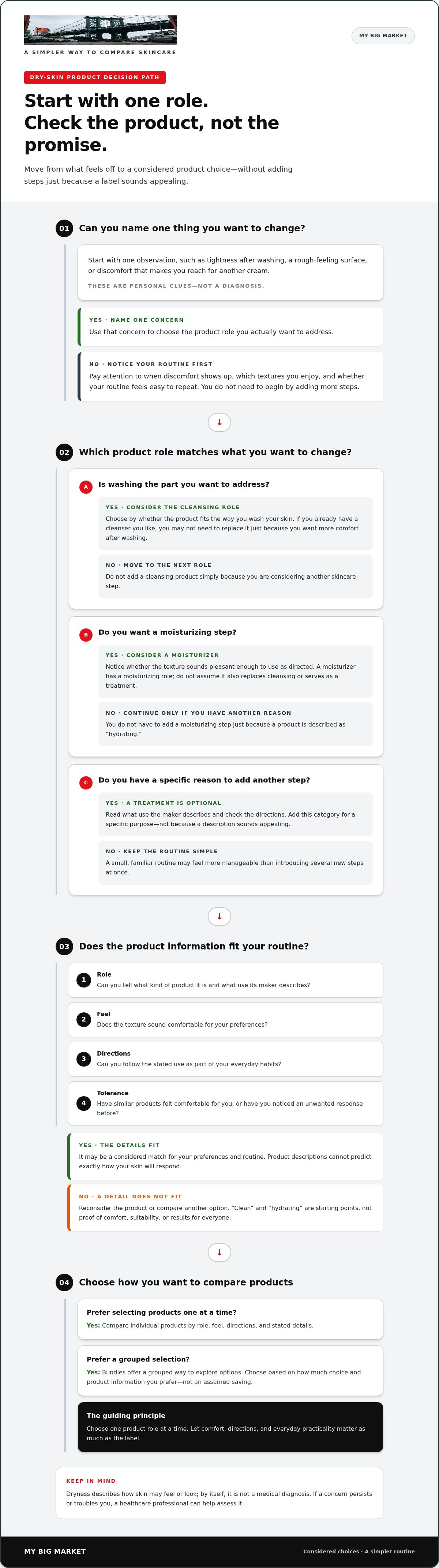
Checklist for Choosing the Best Skincare for Dry Skin
A clear choice doesn’t need to begin with a full routine. Start with what feels uncomfortable, decide which product role you want to consider, then narrow your options using the information available. This keeps the decision focused on your preferences rather than a long list of steps or promises.
A four-step product selection process
- Name your concern. Be specific about what you notice, such as tightness after cleansing or a rough-feeling surface. This is a personal observation, not a diagnosis. Identify the product category that might relate to your concern instead of assuming you need several new products.
- Read before comparing. Look at the product description and directions. Note its stated role and intended use. Don’t read extra benefits into broad words or assume a product is meant for a step its maker hasn’t described.
- Compare what matters to you. Consider the texture you prefer, the directions you can follow, and any past experience with similar products. A choice that fits your comfort and habits may be easier to keep in your routine.
- Choose one starting point. Select one product role to explore first. Make a considered choice based on its stated details and your preferences, not pressure to build a complete routine at once.
This process can make the best skincare for dry skin feel less like a hunt for a perfect label and more like a practical decision. You’re choosing a place to begin, not committing to a shelf full of steps.
How to keep a new choice manageable
Once you’ve chosen, avoid introducing several unfamiliar products at the same time if you’re trying to understand your personal tolerance. Keep the rest of your routine familiar where possible. Follow the product’s label directions and pay attention to how it feels during use. You can make a simple note about texture, comfort, and whether the directions fit your day. There’s no need to expect a set timeline or a particular result.
If a concerning reaction occurs, stop using the product. Persistent, severe, or otherwise concerning skin issues call for qualified medical advice. Product selection can help you make everyday choices, but it can’t diagnose or treat a medical concern.
For a focused next step, explore The hydration collection and use the listed product information to guide your selection.
Explore My Big Market Skincare for a Simpler Dry-Skin Routine
A considered routine starts with your own needs, not a promise on a label. You’ve looked at product roles, directions, personal preferences, and how you like to shop. Bring that same care to browsing My Big Market’s skincare categories. The brand’s approach centers on simplified skincare and clean, caring ingredients. Product descriptions are the place to learn about each item’s stated details.
Explore The hydration collection with your needs in mind
The hydration collection is a named shopping category at My Big Market. Its name can help guide your browsing, but a category name isn’t a treatment description or a promise about results. As you explore, read the product descriptions and directions. Compare each item’s stated role with the concern you identified, and consider whether its use and feel match your preferences.
Keep your decision grounded in what’s written. A product description can explain the maker’s intended use, but it can’t predict exactly how a product will feel for you. If you’re looking for one product role, focus there first. You don’t need to choose additional steps simply because they appear alongside it. A measured choice can make it easier to keep your routine simple and understand what you’re selecting.
Keep the next step calm and uncomplicated
My Big Market also offers Bundles as a shopping category. A grouped selection may suit the way you prefer to browse, but the category alone doesn’t tell you what a specific bundle contains or how its items are meant to be used. Review the listed contents and directions for each product before deciding whether the selection matches what you want to explore.
There’s no need to treat a bundle as a complete routine or a guaranteed fit. Weigh it using the same principles as any individual item: product role, stated use, comfort, and your everyday habits. If you prefer to assess one item at a time, let that preference guide you. If browsing grouped skincare feels simpler, read the details before making a choice.
The best skincare for dry skin is a personal selection, not a category label or a crowded shelf. Let your concern guide where you browse, then use product information to make a thoughtful choice. Explore My Big Market’s skincare categories at your own pace.
Choose Your Next Step with Ease
Make your next skincare choice thoughtfully, not because you feel pressured to add another item. Begin with a single product that suits your preferences, then decide in your own time whether anything else belongs in your routine. Comfort and consistency matter more than a crowded shelf.
The best skincare for dry skin is a personal fit, shaped by what feels right and works with your everyday habits. Give yourself room to choose simply. You don’t need to chase every new label or trend.
My Big Market’s focus on simplified skincare and clean, caring ingredients offers a calm place to continue exploring. Browse The hydration collection or Bundles, and let the product details guide your selection. Explore My Big Market skincare to find a considered place to start.
Frequently Asked Questions
Is skincare for dry skin different from skincare for dehydrated skin?
They usually describe different concerns, though product needs can overlap. Dryness commonly refers to how skin feels or appears, while dehydration describes a lack of water in the skin. The terms alone can’t tell you what’s happening with your skin. Notice how your skin responds to products and follow their directions. If discomfort continues or concerns you, seek advice from a qualified health professional rather than trying to diagnose the cause yourself.
Can I use skincare labeled clean if I have dry skin?
Yes, but a “clean” label alone can’t show whether a product suits you. Brands may use the term differently, so look at the product description and directions for more useful context. For example, if you’ve previously found a certain texture uncomfortable, consider that experience as you compare options. No broad label can promise an individual result or rule out a reaction. Stop using a product if you notice a concerning response.
How many skincare products do I need for dry skin?
There’s no single product count that works for everyone. Begin with the product categories that fit your needs and habits, rather than adding several unfamiliar items at once. A shorter selection may make it easier to keep track of what you’re using. Follow each product’s directions and pay attention to your comfort. If discomfort persists despite everyday care, seek qualified advice instead of adding more products to your routine.
What should I look for in a moisturizer for dry skin?
Start with the moisturizer’s stated purpose, directions, and feel, then consider whether those details suit your preferences. The best skincare for dry skin isn’t determined by the word “hydrating” alone. Read the full description, and don’t assume the product will produce the same result for everyone. If you have ongoing symptoms or a known skin condition, a qualified health professional can offer guidance suited to your situation.
Can a skincare bundle work for dry skin?
A bundle may make browsing more convenient, but its grouped format doesn’t mean every item matches your needs. Review the listed contents and directions for each product before choosing. For example, consider whether you’re comfortable assessing all the included items together. If you’d rather understand one change at a time, selecting products individually may feel clearer. Treat a bundle as a way to shop, not as a promised routine or treatment.
How can I tell if a skincare product is irritating my skin?
Pay attention to how your skin feels after use, and follow the product’s directions. A new or worsening uncomfortable response may be a reason to stop using it, but a general article can’t identify its cause. If a reaction worries you, discontinue the product and seek qualified medical advice. Get professional guidance especially if symptoms are severe, persistent, or getting worse, rather than trying to manage them by adding more skincare.
Should I change my skincare routine when the weather gets colder?
Not automatically. Colder weather or indoor conditions may change how comfortable your skin feels, but that doesn’t mean every product needs replacing. Notice whether your current routine still feels suitable and continue to follow product directions. If you choose to adjust it, make one change at a time so it’s easier to notice how your skin responds. Seek professional advice for persistent discomfort or a sudden skin change that concerns you.